Tutorial 03 — Revocation server + client that polls it
Objectif — run the signed-CRL HTTP server in the TUI and have a client honour revocations the operator publishes live. Concepts — CRL · monotonic sequence (downgrade defence) ·
revoke.HTTPSource· on-disk cache fallback Attendu — client accepts the licence; after the operator pressesr, the next poll rejects it. With the manager offline, the cached CRL still enforces the last known revocations.
In the TUI
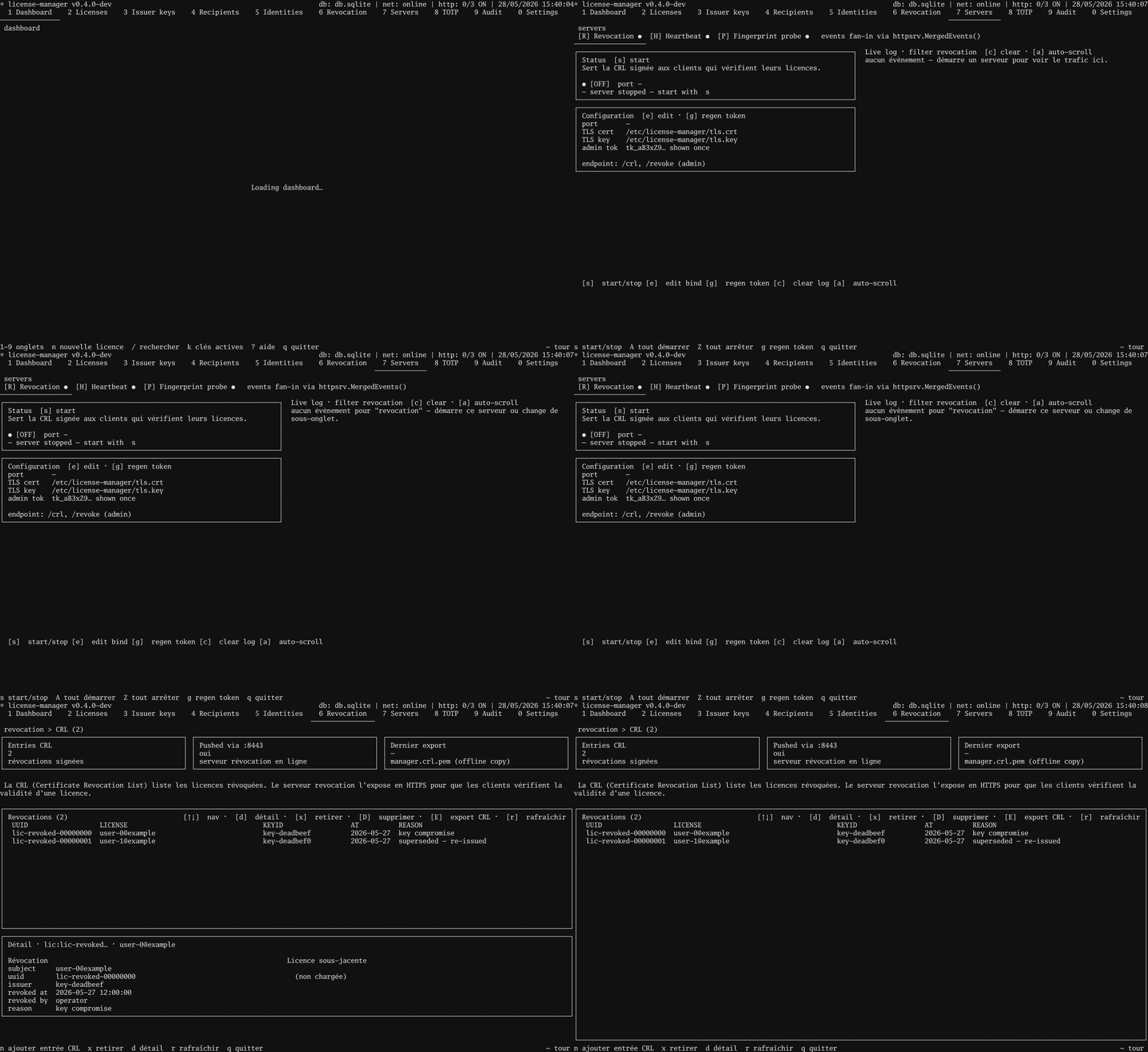
7→ Servers screen.- Cursor on Revocation, press
sto start. - The row shows
runningand aListenaddress such as127.0.0.1:8443. Copy it. 2→ Licences. Issue a licence (any wizard path). PressE→/tmp/alice.license→Enter.3→ Issuers →E→/tmp/issuer.pub→Enter.
To revoke later: 2 → Licences → cursor on the row → r →
type a reason → Enter. The CRL re-publishes immediately.
In your program
package main

import (
    "log"
    "net/http"
    "os"
    "time"

    license "github.com/oioio-space/maldev/license"
    "github.com/oioio-space/maldev/license/revoke"
)

func main() {
    licPEM, _ := os.ReadFile("/tmp/alice.license")
    pubPEM, _ := os.ReadFile("/tmp/issuer.pub")

    pub, kid, _ := license.ParsePublicKey(pubPEM)
    trusted := license.Trusted{Keys: license.SingleKey(kid, pub)}

    src := revoke.HTTPSource(
        "http://127.0.0.1:8443/revoked.pem",
        &http.Client{Timeout: 5 * time.Second},
    )

    v, err := license.Verify(licPEM, trusted,
        license.WithRevocation(src, time.Hour, "/var/cache/myapp/crl.pem"),
    )
    if err != nil {
        log.Fatalf("license check failed: %v", err)
    }
    log.Printf("running for %s", v.Subject)
}
The cachePath matters: if the manager is offline, the client
replays the last signed CRL it saw. The CRL's monotonic
Sequence blocks stale-cache downgrade attacks.
Runnable client:
examples/.../03-revocation-server/client.
Test it together
go test ./examples/license-manager/tutorials/03-revocation-server
Boots a real CRL server, issues a licence, runs the client (accepted), revokes via the TUI service, runs the client again (rejected).